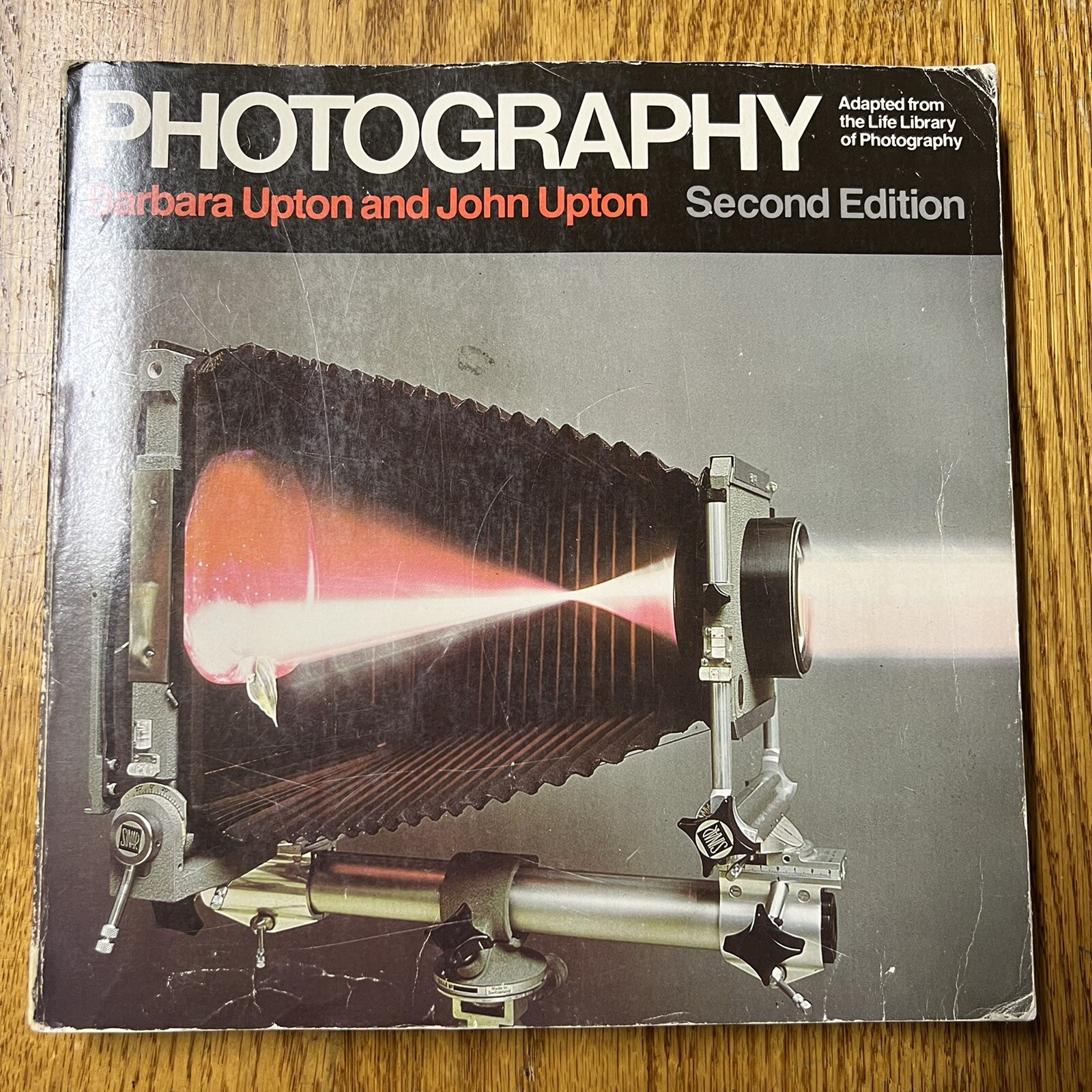





Vintage 1981 Photography by Barbara London John Upton 2nd Second Edition How-to
$ 10.01
Description
Vintage 1981 "Photography" by Barbara London Upton and John Upton. 2nd Second Edition. 390 Pages. Contents Include: 1 Introduction to Photography 2 Camera The Anatomy of a Camera The Major Types of Cameras The Camera's Controls Keeping the Camera Steady Buying a Camera 3 Lens Why Lenses Are Needed Types of Lenses Depth of Field Perspective Getting the Most from a Lens On Choosing Lenses 4 Light and Film Making an Image in Silver A Characteristic Response to Light Choosing a Film How Black-and-White Film Sees Color The Polaroid Land Process 5 Exposure Light Meters and How to Use Them Out-of-the-Ordinary Exposures 6 Developing the Negative How to Process Roll Film Step by Step How Developer Chemicals Affect a Negative How Time and Temperature Affect Development Exposure and Development: Under, Normal, Over The Need for Proper Agitation. .. and Fresh Solutions The Importance of Careful Washing and Drying Care Prevents These Darkroom Disasters Special Development Techniques 7 Printing the Positive How to Process Prints How to Judge a Test Print Papers That Control Contrast The Versatility of Variable Contrast Paper Dodging and Burning In How to Make Better Prints Archival Processing for Maximum Permanence 8 Finishing and Mounting Drying Your Prints Spotting and Toning How to Dry Mount Cutting an Overmat 9 Lighting Direct Light Directional-Diffused Light Fully Diffused Light Silhouette Light as You Find It-Outdoors Light as You Find It-Indoors The Main Light: The Most Important Source The Fill Light: Modifying Shadows Lighting a Portrait Lighting Translucent Objects Lighting Textured Objects Lighting Shiny Objects Lighting with Flash Six Ways to Use Flash Calculating Exposures with Flash Avoiding Common Mistakes with Flash 10 View Camera Inside the Modern View Camera The Four Camera Movements Controlling Plane of Focus and Depth of Field Controlling Perspective Dealing with Distortion What to Do First-and Next Loading and Processing Sheet Film 11 Zone System Learning the Zone Scale Zone Scale and Exposure Meter for Precise Exposure How Development Controls Contrast A Full-Scale Print A Flat or a Contrasty Print-When You Want One Putting It All Together 12 Special Techniques The World in Close-Up Special Printing Techniques Techniques Using High-Contrast Film Xerography-Prints from an Office Copy Machine 13 Color To Make Colors, Add or Subtract Color Photographs: Three Image Layers Matching Film to the Light Source Filters to Balance Color Color Casts Shooting Color Early or Late Shifted Colors from Reciprocity Effect Bold Use of Direct Light/ Delicate Tones in Indirect Light Processing Your Own Color Making a Color Print from a Negative Making a Color Print from a Transparency Instant Color Film 14 Camera Vision The Frame: The Whole Scene or a Detail The Frame: The Edges of the Image Point of View: Seeing from Another Angle Sharpness-or the Lack of It Photographing the Light-or the Dark 15 History of Photography The Invention of Photography Designs on Silver Calotype: Pictures on Paper Collodion Wet-Plate: Sharp and Reproducible Early Portraits Images of War Early Travel Photography Gelatin Emulsion /Roll-Film Base: Photography for Everyone Time and Motion in Early Photographs The Photograph as Document Photography and Social Change The Photograph as Art in the 19th Century Pictorial Photography and the Photo-Secession The Direct and Unmanipulated Image The Quest for a New Vision Photojournalism The 1950s and After The 1960s and After 16 Gallery Glossary Bibliography Index