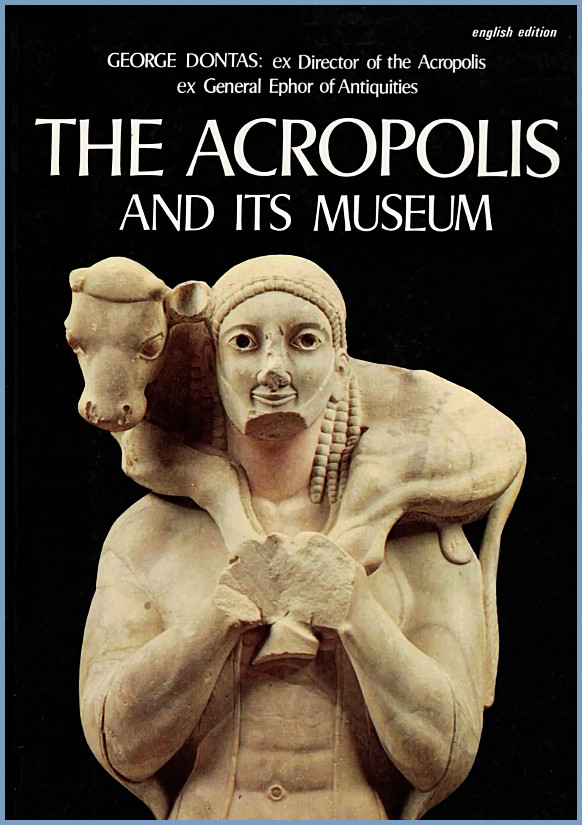


The Acropolis and its Museum by George Dontas (softcover, mint)
$ 13.2
Description
The Acropolis and its Museum by George Dontas (softcover, mint). This is no ordinary travel guide. For collectors of classical art books, travelers to Greece, or scholars of Hellenic civilization, this excellent-condition copy represents an uncommon find. Keys: Athens, Acropolis, Parthenon, Erechtheion, Propylaea, classical antiquity, Greek sculpture, archaeology, art history, travel guide, Clio Editions, Greece, fold-out map, museum guide, first edition, 1979, illustrated. The Acropolis and Its Museum is a richly illustrated guide to one of the world's most celebrated archaeological sites, written by George Dontas, who served as General Ephor of Antiquities and Director of the Acropolis at the time of publication. This is no ordinary travel guide. Dontas brings the full weight of his scholarly credentials to bear on the Parthenon, the Erechtheion, the Propylaea, and the treasures housed in the Acropolis Museum, examining each monument and artifact through archaeological, historical, and aesthetic lenses. The text is compact but authoritative, proceeding with the confidence of someone who knew these stones intimately. Richly complemented by color photographs and a large fold-out color plan of the museum, the book offers both orientation for the first-time visitor and genuine depth for the serious student of classical antiquity. Published in Athens by Clio Editions in 1979, this first edition predates the construction of the New Acropolis Museum by three decades, making it a valuable period document of the original museum's collection and arrangement. For collectors of classical art books, travelers to Greece, or scholars of Hellenic civilization, this excellent-condition copy represents an uncommon find. Keys: Athens, Acropolis, Parthenon, Erechtheion, Propylaea, classical antiquity, Greek sculpture, archaeology, art history, travel guide, Clio Editions, Greece, fold-out map, museum guide, first edition, 1979, illustrated. George Dontas served as General Ephor of Antiquities and Director of the Acropolis in Greece. He studied archaeology in Athens and Munich and earned his doctorate from the University of Athens. His scholarly work focused on ancient Greek sculpture, particularly portraiture, and he authored numerous archaeological articles on the subject.