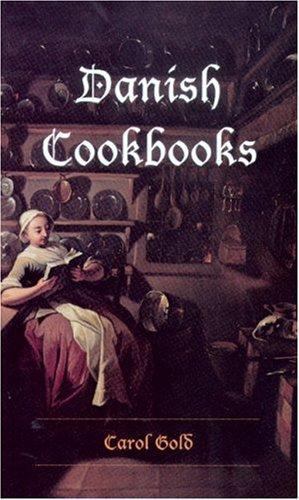
Danish Cookbooks: Domesticity and National Identity 1616-1901 by Carol Gold 2007 Paperback
$ 9.51
Author:
Carol Gold
LCCN:
2007-002324
ISBN-10:
0295986824
Language:
English
Format:
Trade Paperback
brand:
University of Washington Press
LC Classification Number:
GT2853.D4G66 2007
Item Height:
0.9 in
Dewey Decimal:
394.1/2
Reviews:
A tasty menu of Danish cultural delights served up through an enchanting historical narrative.-Terje Leiren, University of Washington, Carol Gold makes a convincing case for the role of cookbooks as evidence of and participants in social, economic, and political changes in Denmark. She weaves the stories cookbooks tell into an engrossing book, one that is exhaustively researched and well argued. Gold's methods and careful analysis offer a model of inquiry that can guide a critical assessment of the social role of any group of older cookbooks.
Publisher:
University of Washington Press
ISBN-13:
9780295986821
Item Weight:
19.9 Oz
Synopsis:
Cookbooks tell stories. They open up the worlds in which the people who wrote and read them once lived. In the hands of a good historian, cookbooks can be shown to contain the markings of political, social, and ideological changes that we conventionally locate outside the kitchen. Over time, cookbooks allow us to trace the course of empires, of social roles, and of new nations. Danish Cookbooks draws from three hundred years of cookbooks to trace the growth of a bourgeois consciousness, the development of domesticity and gendered spheres, and the evolution of nationalism and a specific Danish identity from the early seventeenth to the end of the nineteenth century. Like all prescriptive literature, cookbooks do not merely reflect the changes of the day but also constitute them. Historian Carol Gold reads recipes and cooking instructions for what can they tell us about literacy levels, division of labor in the kitchen and in society, and changes in the gendered aspects of publishing and utilizing cookbooks. Gold explores the authors' instructions for economic and hygienic housekeeping, and their sentiments about Danish identity as spelled out in dishes and spices. Just as the Danish nation would manage the body politic, so women were exhorted to manage the house and ensure the family's physical and moral health. Through the pages of cookbooks-recipes, menus, and table settings-we can chart the growth of a nationalist Denmark and track the development of what it means to be a Dane., Danish Cookbooks draws from three hundred years of cookbooks to trace the growth of a bourgeois consciousness, the development of domesticity and gendered spheres, and the evolution of nationalism and a specific Danish identity from the early seventeenth to the end of the nineteenth century.Historian Carol Gold reads recipes and cooking instructions for what can they tell us about literacy levels, division of labor in the kitchen and in society, and changes in the gendered aspects of publishing and utilizing cookbooks. Through the pages of cookbooks-recipes, menus, and table settings-we can chart the growth of a nationalist Denmark and track the development of what it means to be a Dane., Cookbooks tell stories. They open up the worlds in which the people who wrote and read them once lived. In the hands of a good historian, cookbooks can be shown to contain the markings of political, social, and ideological changes that we conventionally locate outside the kitchen. Cookbooks allow us to trace the course of empires, of social roles, and of new nations over time. Danish Cookbooks: Domesticity and National Identity, 1616-1901 draws from three hundred years of Danish cookbooks to trace the growth of a bourgeois consciousness, the development of domesticity and gendered spheres, and the evolution of nationalism and a specific Danish identity from the early seventeenth to the beginning of the twentieth century. Like all prescriptive literature, cookbooks do not merely reflect the changes of the day but also constitute them. Historian Carol Gold reads recipes and cooking instructions for what they can tell us about literacy levels, division of labor in the kitchen and in society, and changes in the gendered aspects of publishing and using cookbooks. Gold explores the authors' instructions for economic and hygienic housekeeping and their sentiments about Danish identity as spelled out in dishes and spices. Just as the Danish nation would manage the body politic, so women were exhorted to manage the house and ensure the family's physical and moral health. Through the pages of cookbooks - in recipes, menus, and table settings - we can chart the growth of a nationalist Denmark and track the development of what it means to be a Dane. Written with the ease of a veteran historian and in an accessible and engaging style, Danish Cookbooks will appeal to scholars in Scandinavian studiesas well as in gender and women's studies. It will also appeal to nonacademic readers interested in historical aspects of Danish nationalism and identity, women's social history, and cookbooks and cooking.
Illustrator:
Yes
Topic:
Regional & Ethnic / Scandinavian, Europe / Scandinavia, Agriculture & Food (See Also Political Science / Public Policy / Agriculture & Food Policy)
Genre:
Cooking, Social Science, History
Book Title:
Danish Cookbooks : Domesticity and National Identity, 1616-1901
Intended Audience:
Trade
Number of Pages:
240 Pages
Book Series:
New Directions in Scandinavian Studies
Dewey Edition:
22
Publication Year:
2007
Item Width:
6 in
Item Length:
9 in
gtin13:
9780295986821
This book is a fascinating deep dive into Danish culinary history, blending food culture with national identity in a way that feels both scholarly and engaging. Carol Gold’s research is thorough yet accessible, making it a great read for history buffs and food lovers alike. The insights into domestic life and traditions are eye-opening, and the vintage recipes add a charming touch. A must-have for anyone interested in Scandinavian heritage or the evolution of home cooking!